

A newly promoted CEO told me he had finally figured out the job.
“Everyone reports to me now,” he said. “I run the company.”
He meant it as a milestone. I heard it as a warning.
A few weeks later I sat in the back of his leadership team meeting. He had come in short on sleep and long on frustration about a missed forecast. He never raised his voice. He did not have to. Ninety minutes, and the two people with the most to say said the least.
A CEO’s behavior does not carry the same weight as everyone else’s. In the organizations I work in, it carries roughly twice the weight of any other individual — not because the CEO is twice as capable, but because everyone else is watching to see what is safe, what is urgent, and what is actually rewarded. Your mood gets read, interpreted, and repeated down three layers before lunch.
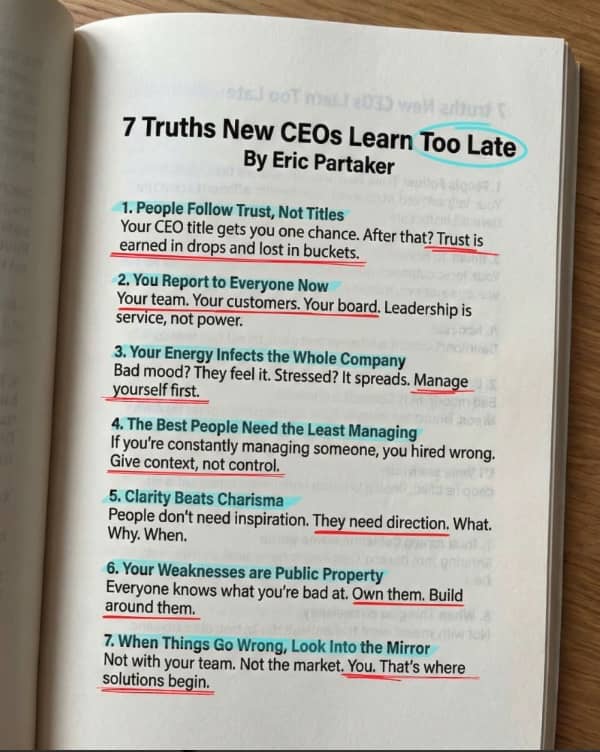
The title tells you that everyone reports to you. The job tells you the opposite. You report to your team, who need context and clarity to do their work. You report to your customers, who decide whether any of it mattered. You report to your board, who are accountable for what you build.
Authority moves down the org chart. Obligation moves back up.
The CEOs who internalize that early stop asking “what do I need from them this week” and start asking “what do they need from me to do their best work.”
If you took a hard look at your last three leadership meetings — were you being served, or were you serving?
Comments are closed